BUSINESS CONTEXT

Year
2024
Category
Health & Wellness
Role
Digital UI/UX Designer
Status
Completed initial design, project on hold due to strategic shift
UX METHOD
Why it was chosen:
⤷
Time- and cost-efficient: Desk research allowed immediate access to relevant data without the need for time-consuming fieldwork.
⤷
Strategic clarity: It helped identify user segments and unmet needs in the market that WellMind could address, aligning directly with business goals.

Target Users
Students & Young Adults (Ages 18–24)
Needs: Emotional regulation and mental support while managing academic pressure and life uncertainty.
Behavior: Regular users of social apps and mobile games; enjoy gamified experiences.
Goals: Build positive habits, improve mood, and gain more self-awareness.
How WellMind Helps: Engaging gamification, group challenges, leaderboard features, and social motivation.
Office Workers (Ages 25–40)
Needs: Balance between work and personal life, stress reduction, and renewed motivation.
Behavior: Frequently use smartphones; prefer apps that are quick, simple, and effective.
Goals: Find accessible mental wellness support that fits into a busy schedule.
How WellMind Helps: Short challenges, progress tracking, and virtual rewards to create a sense of achievement and calm.

Problem Statement
Research Process 🔎
Method userd - Desk Research: selected due to a tight 2-week timeline and the need to define user needs quickly and effectively.
Sources: Aggregated insights from
➤ UNICEF – On My Mind 2021: 1 in 5 young people (ages 15–24) frequently feel depressed or disengaged.
➤ WHO – World Mental Health Report 2022: Global anxiety and depression rates increased by 25% after the COVID-19 pandemic.
➤ Gallup – Global Emotions Report 2023: 41% of adults worldwide reported feeling stressed the previous day.
Scope of analysis: Reviewed over 15 global and regional reports focused on digital wellness behaviors, especially in the Asia-Pacific region, targeting ages 18–40.
Key insights gathered:
➤ Users are motivated by small, achievable goals.
➤ Social accountability enhances motivation and consistency.
➤ Progress tracking and gamified rewards are crucial for long-term engagement.
Competitive Analysis 📊
Heuristic Evaluation + Feature Comparison Matrix: a structured approach for fast, effective comparison across core UX and feature areas.
Competitors analyzed:
➤ Strava – strong in leaderboard and social engagement.
➤ Leka – focused on mental wellness activities for children and parents.
➤ Supplemented by Fabulous for gamification and tone.
User Interface
Key comparison criteria:
➤ Personalization: Makes the app emotionally relevant.
➤ Challenge System: Helps form consistent mental habits.
➤ Rewards: Boosts motivation and retention.
➤ Community: Encourages accountability and emotional support. (oriented & unrealized)
User Research Insights 🗣️
Research revealed that users are most motivated by achievable goals and rewards that acknowledge their progress. Users also expressed a desire for a platform that integrates mental health with social interaction to enhance their motivation
Competitive Analysis 📊
The app was benchmarked against competitors like Leka and Strava, focusing on features like mental health improvement, gamification, and leaderboards. WellMind stands out with its unique combination of mental health challenges and a blockchain-based reward system, which was not found in competitor offerings


Key Features
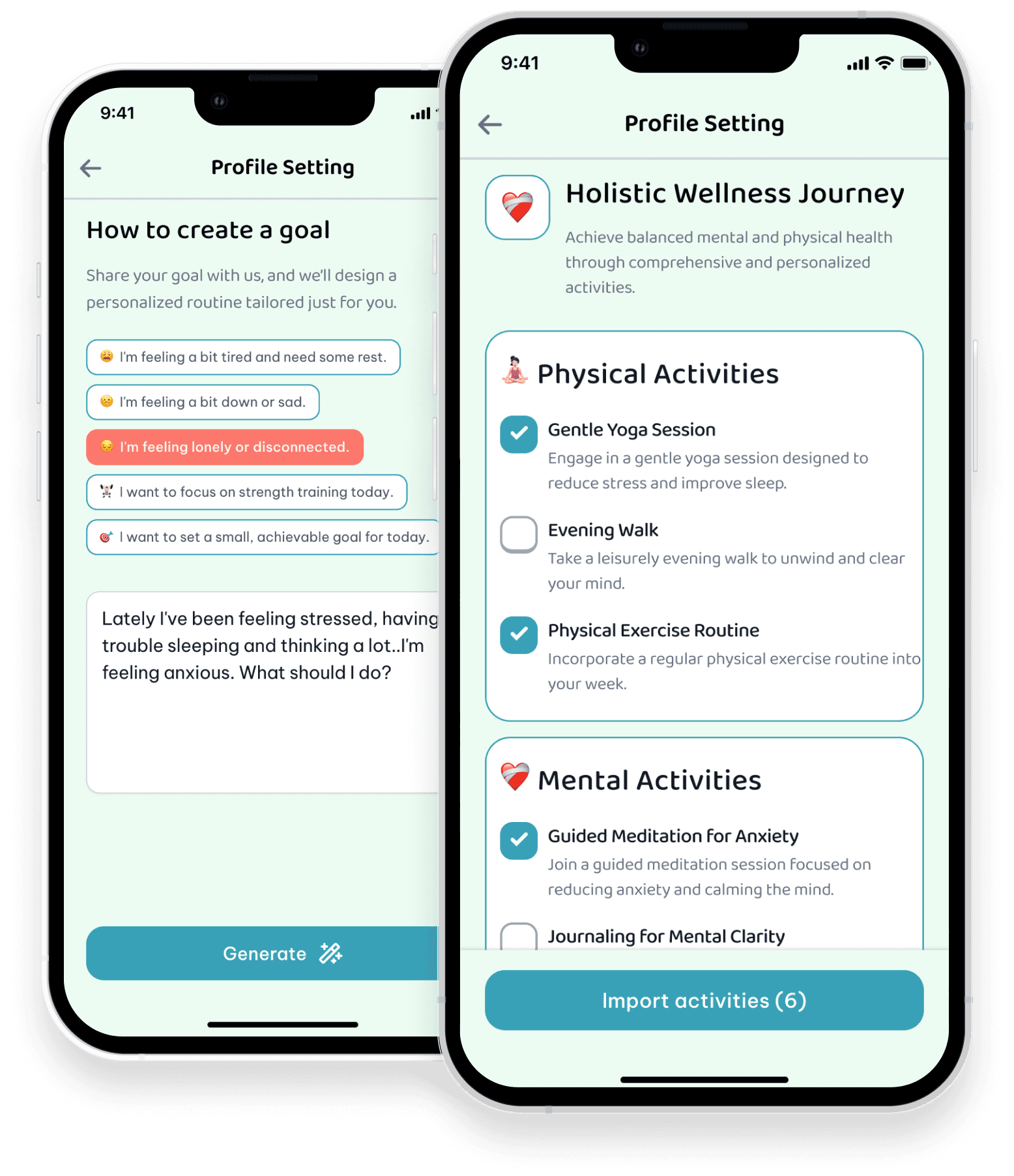
WellMind enhances user engagement and motivation through personalized experiences, gamification, and community-driven features. Here are the core aspects that define the app
Personalized Challenges ⛰️
Users can engage in challenges specifically tailored to their individual goals and preferences, ensuring a unique and relevant experience that supports their mental health journey.

Gamification ♟️
The app incorporates elements like points, badges, and leaderboards to motivate users, making their wellness activities more engaging and rewarding.

Reward Mechanism ⚡️
WellMind features a non-intrusive reward system that recognizes users’ progress with points, achievement badges, and milestone feedback. These rewards help reinforce positive behaviors without creating pressure, supporting sustainable habit formation.

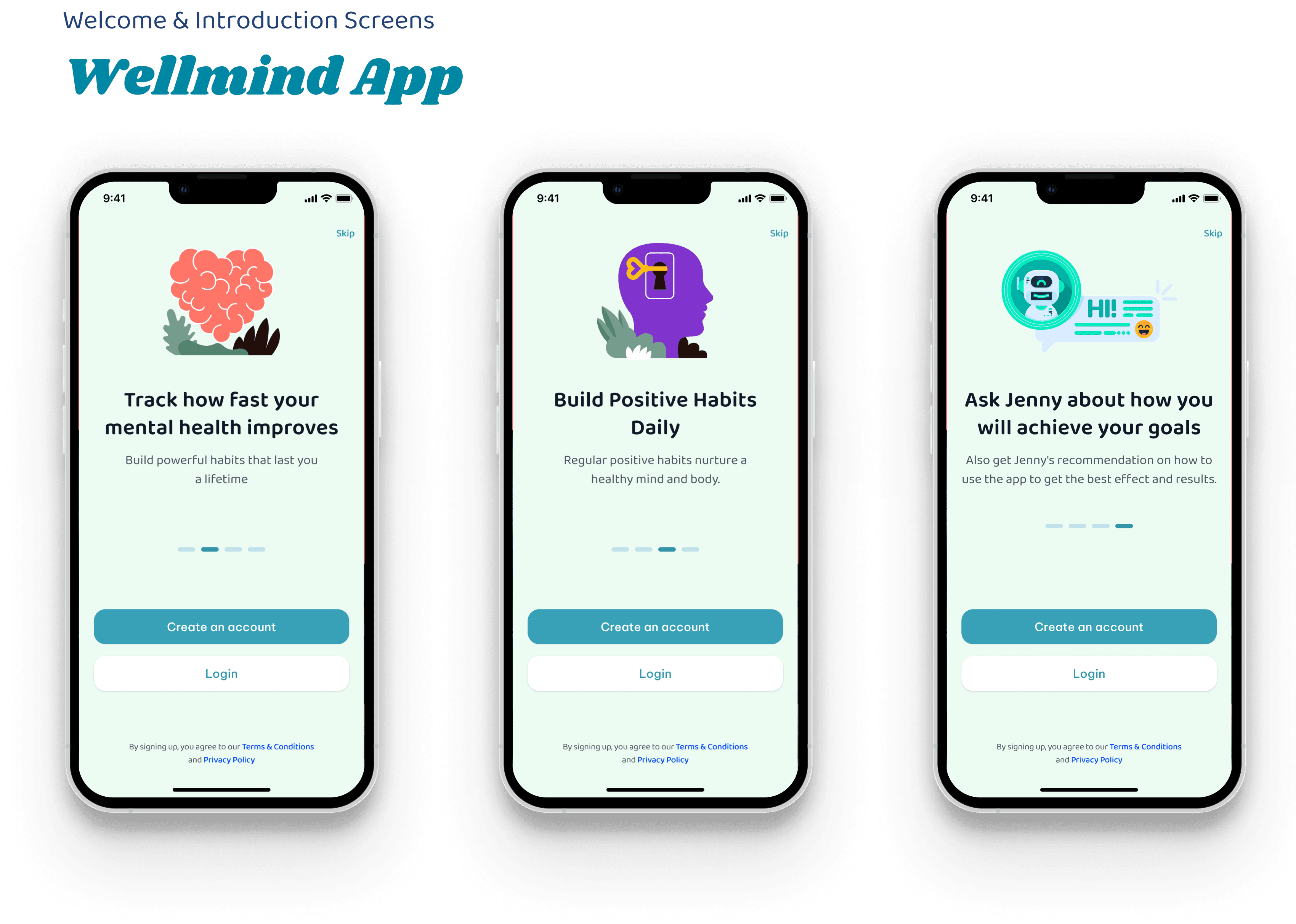
PRODUCT INTRODUCTION
Outcome
The project successfully reached the completion of its Phase 1 scope, with all core features designed and prepared for development. However, the project was halted due to a strategic shift in company direction, leading to the discontinuation of the app’s development.
UI DESIGN
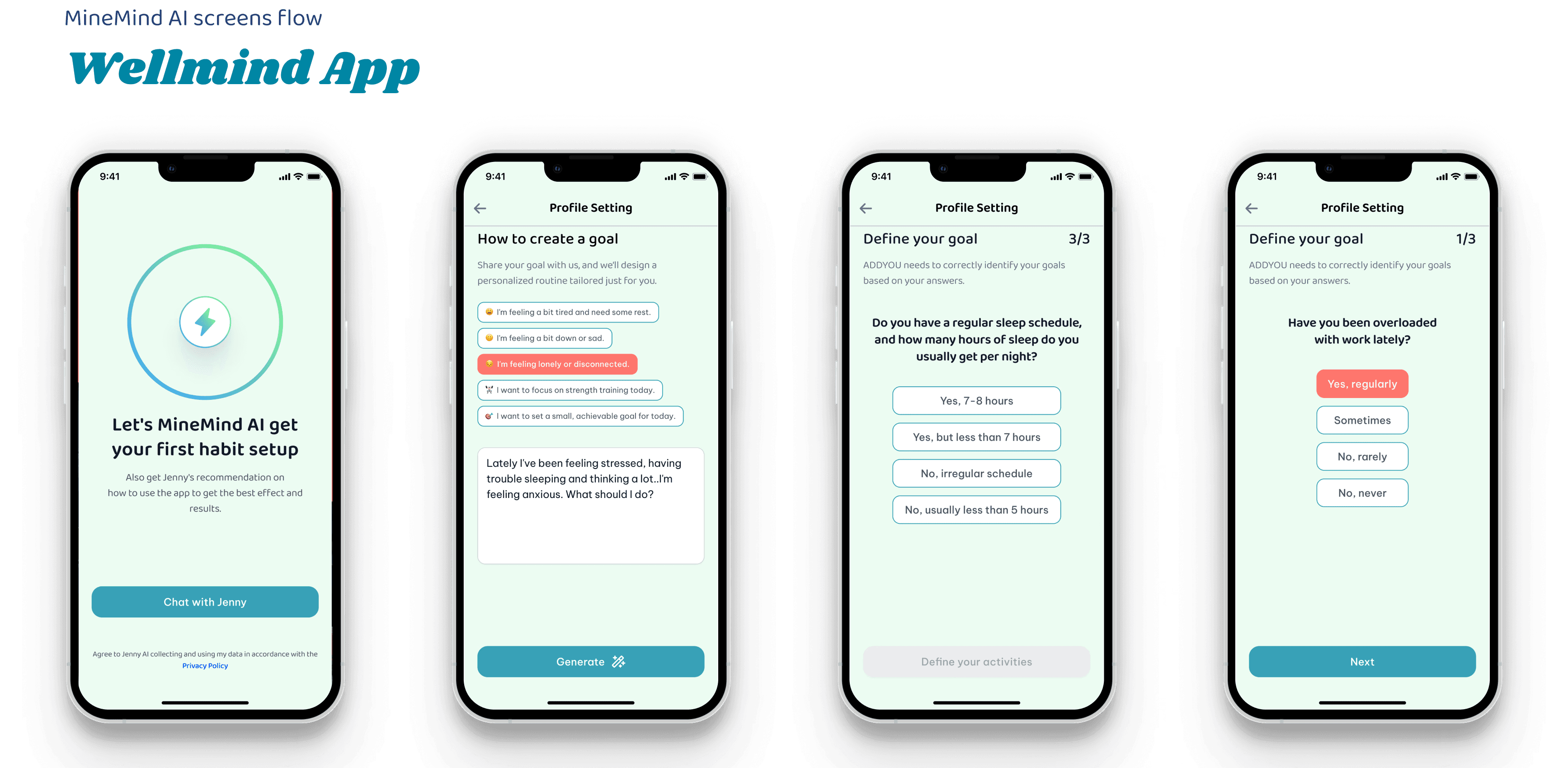
The UI design was crafted with a calming color palette and simple typography to enhance the user’s experience. Key UI elements were designed to make the app intuitive, helping users to focus on their wellness journey without unnecessary distractions.

Learnings
Working on WellMind taught me how to extract actionable insights quickly through focused desk research. I realized that competitor analysis, when done right, can directly shape product direction—not just list features.
I also learned the importance of defining a clear scope early. Ambiguity in goals caused unnecessary design loops. Going forward, I’ll prioritize aligning user needs with business goals from day one.


DESIGN SYSTEM
The product initially lacked a consistent brand identity, so I developed a design system from scratch. For projects with existing sponsor branding, I adapted the guidelines and expanded them into a complete, scalable system. This helped ensure visual consistency while streamlining collaboration between designers and developers.
My work not only unified the UI but also improved the product’s scalability and future handoff efficiency.